Utah Ranch creature descriptions. Visualizing the accounts.
By Aurum Tools · Published and reviewed October 25, 2026 · Primary source: DOW-UAP-D174
A realistic rendering can make a description easier to picture. It cannot tell us whether a sighting was accurate or what a witness actually saw.
ARTIST’S RENDITIONS · FICTIONAL VISUALIZATIONS · NOT EVIDENCE
Dog-like biped
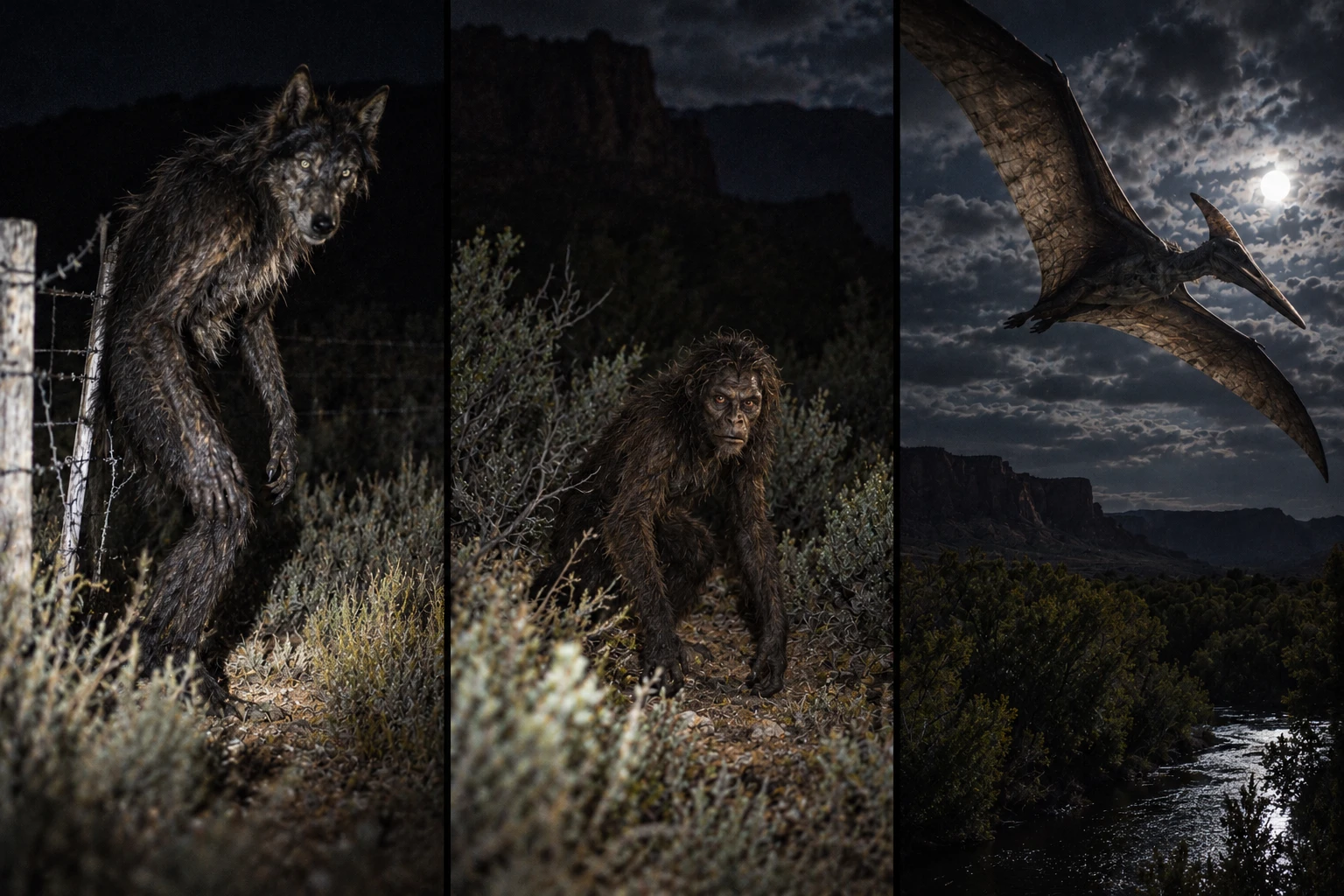
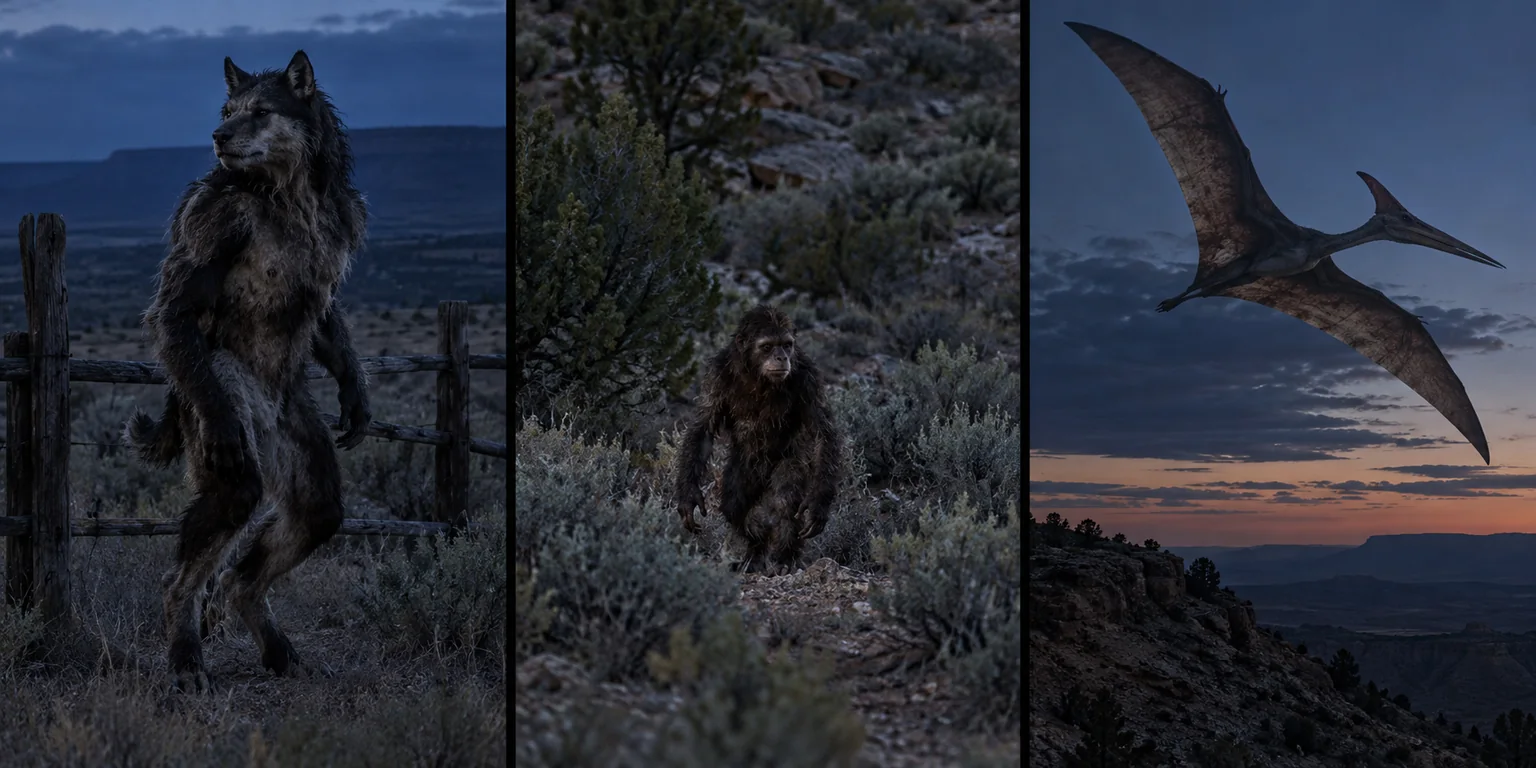
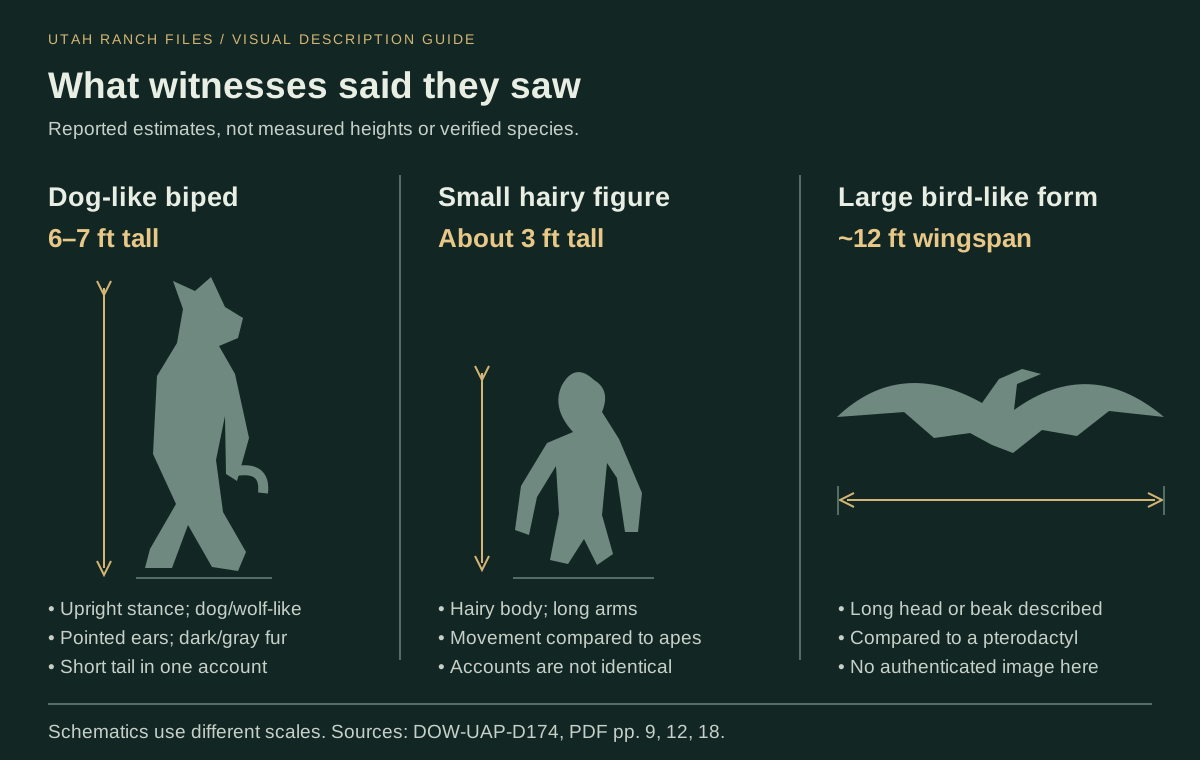
The abstract describes witness estimates of six to seven feet for an upright dog- or wolf-like creature. An individual account mentions dark fur with gray mixed in, pointed ears, a short tail, a hunched stance, and a head compared with a German shepherd, but with a less pointed nose. Accounts differ, so the rendering should not be treated as a composite identification of a real species.
The abstract summarizes reports of roughly three-foot-tall hairy forms with long arms and movement compared with apes. The artist’s rendition supplies details the descriptions do not establish. The report also contains separate “little people” accounts; those should not automatically be collapsed into one creature category.
An interview describes a creature compared with a prehistoric pterodactyl, with an estimated twelve-foot wingspan and a long head or beak. These were witness estimates. The rendering does not depict an authenticated surviving prehistoric animal.
The report mentions large worm-like forms and unusual shadows. It also records lights and a supposed portal. These descriptions are not all the same type of claim, and an illustration cannot supply the missing evidence needed to identify their causes.
The following images explore a full-body stance, a low figure among scrub, and an outstretched bird-like form. Compare their imagined features with the reported estimates below.
ARTIST’S RENDITIONS · FICTIONAL SCENES, NOT REAL PHOTOGRAPHS OR EVIDENCE Lighting, setting, anatomy, and posture are imagined. Separate panels are not a record of one event and do not use a common scale.WITNESS-DESCRIPTION INFOGRAPHIC · Schematic drawings, not evidence of real creatures. Sizes are witness estimates; panels use different scales. PDF p. 9, p. 12, p. 18. Open the image for full-size labels.
SOURCE CHECK
Drawings in the file are drawings, too.
PDF pages 28 and 29 include illustrations linked to witness accounts. They provide a way to compare reported features with modern visualizations, but they are not photographs of creatures.